Since opening its giant gates on 13 December 1912, Luna Park has been making St Kilda smile. Founded by North American entrepreneur J.D. Williams and Los Angeles-based brothers Leon, Herman and Harold Phillips, the park was part of the great American-style amusement park movement sweeping the world at the time.
Named after the famous Luna Parks of the United States, most notably the legendary park at Coney Island, St Kilda’s Luna Park drew on the expertise of designers responsible for some of those American attractions. Their influence helped create a slice of Coney Island-style amusement on the Melbourne foreshore, where ordinary life could be left behind for a few hours of thrills, laughter and pure escapism.
And what an escape it was. You could walk through Mr Moon’s giant grinning mouth and leave the everyday world behind. The lights, music, rides and crowds transformed the familiar St Kilda foreshore into somewhere that felt entirely different. For generations of Melburnians, Luna Park wasn’t simply somewhere to go for a ride. It was a little world of its own.
At the heart of it all was the Great Scenic Railway. Built almost entirely from timber, apart from its rails, the ride stretches for nearly a kilometre around the park and is the world’s oldest continually operating wooden roller coaster. It even has its own standing brakeman, a wonderfully old-fashioned feature that has become part of the ride’s unique character.
During Queen Elizabeth II’s 1954 Coronation Tour, Her Majesty visited the park, leaving us to wonder whether she also experienced the thrills of the Scenic Railway. More than a century later, the rides may change, but the promise remains the same: step through Mr Moon’s famous gates, leave reality behind, and have a little fun.
This Suburban Icons print celebrates Luna Park as one of Melbourne’s great icons, capturing the cheeky charm of Mr Moon and the timeless sense of escape behind those famous gates.

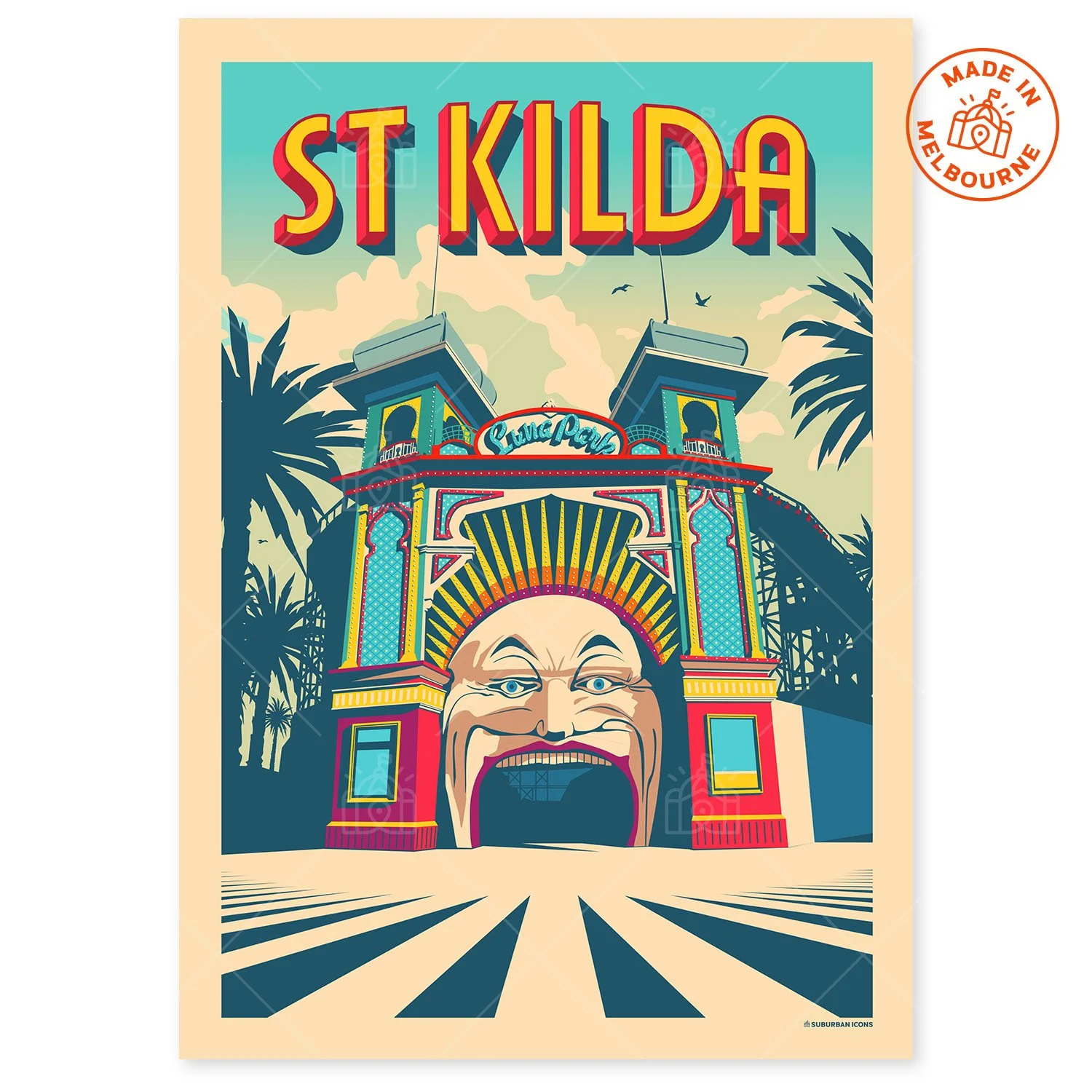 Image 1 of 10
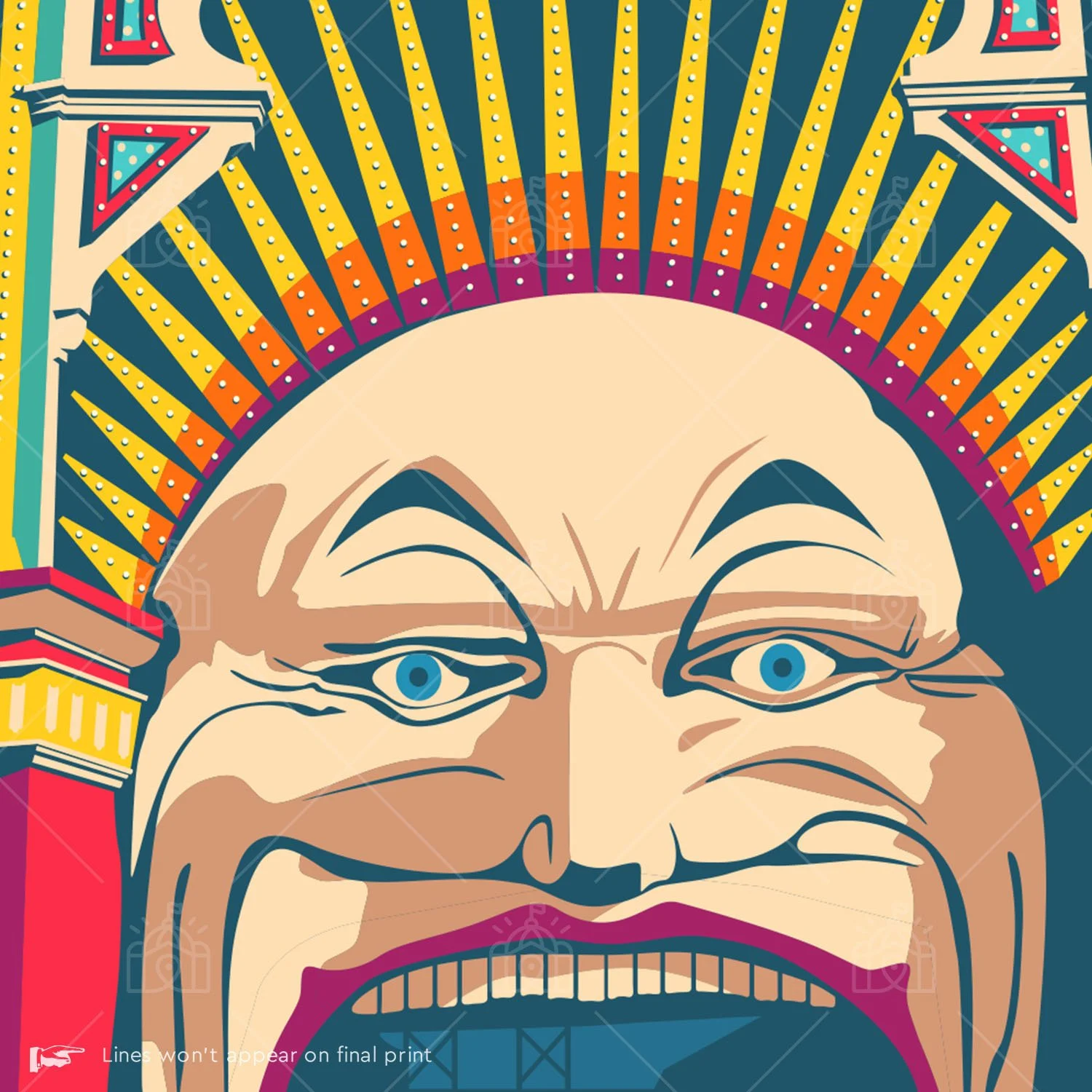 Image 2 of 10
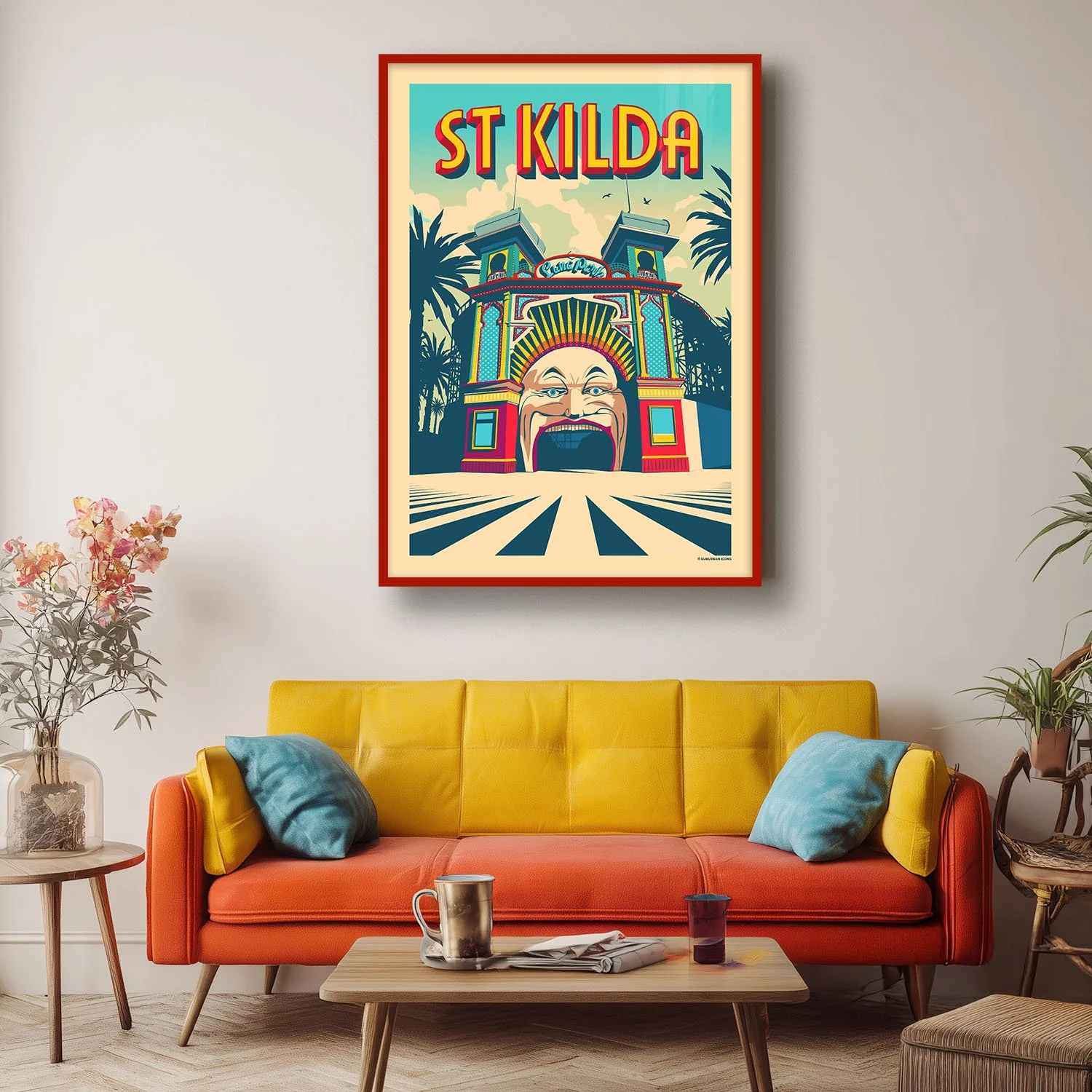 Image 3 of 10
 Image 4 of 10
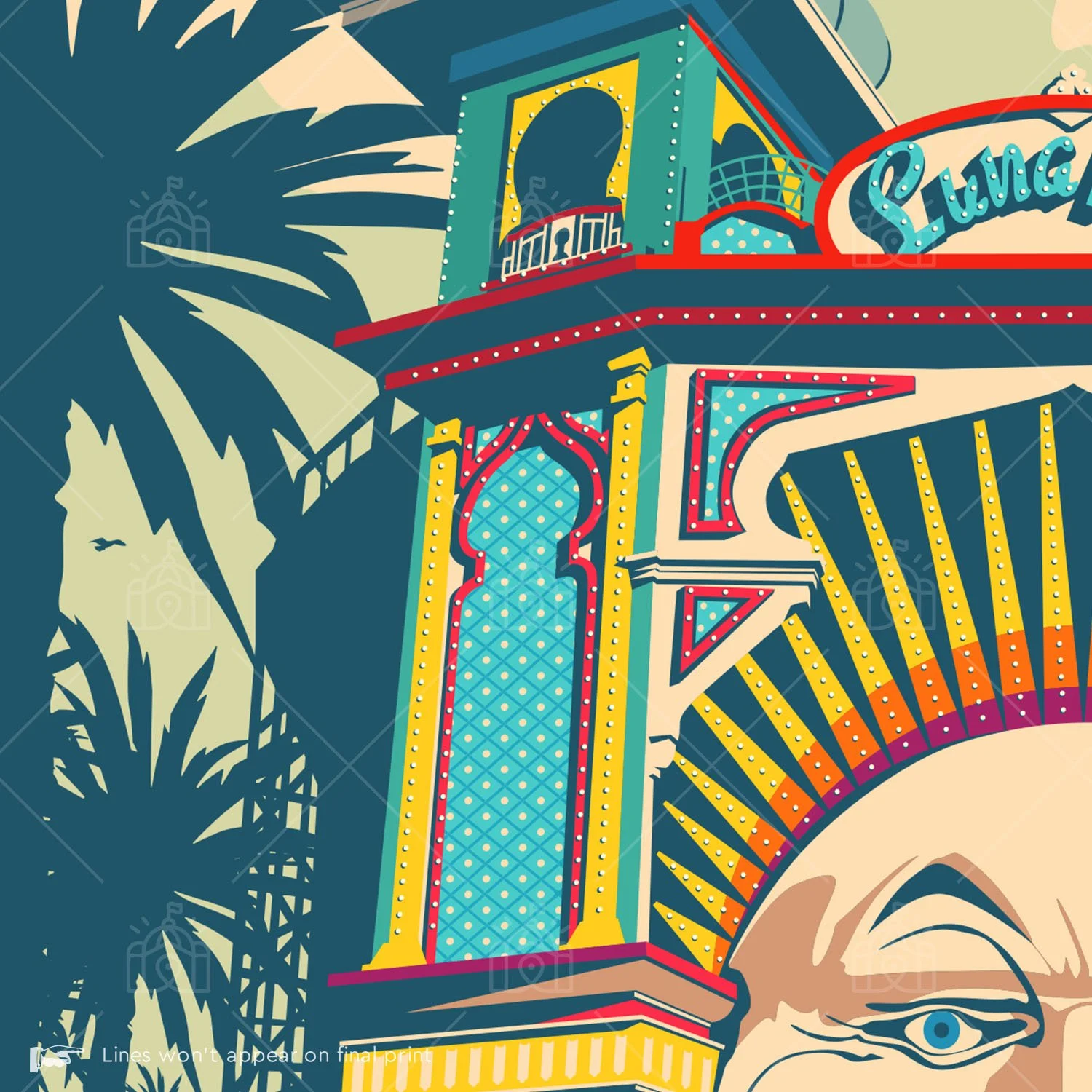 Image 5 of 10
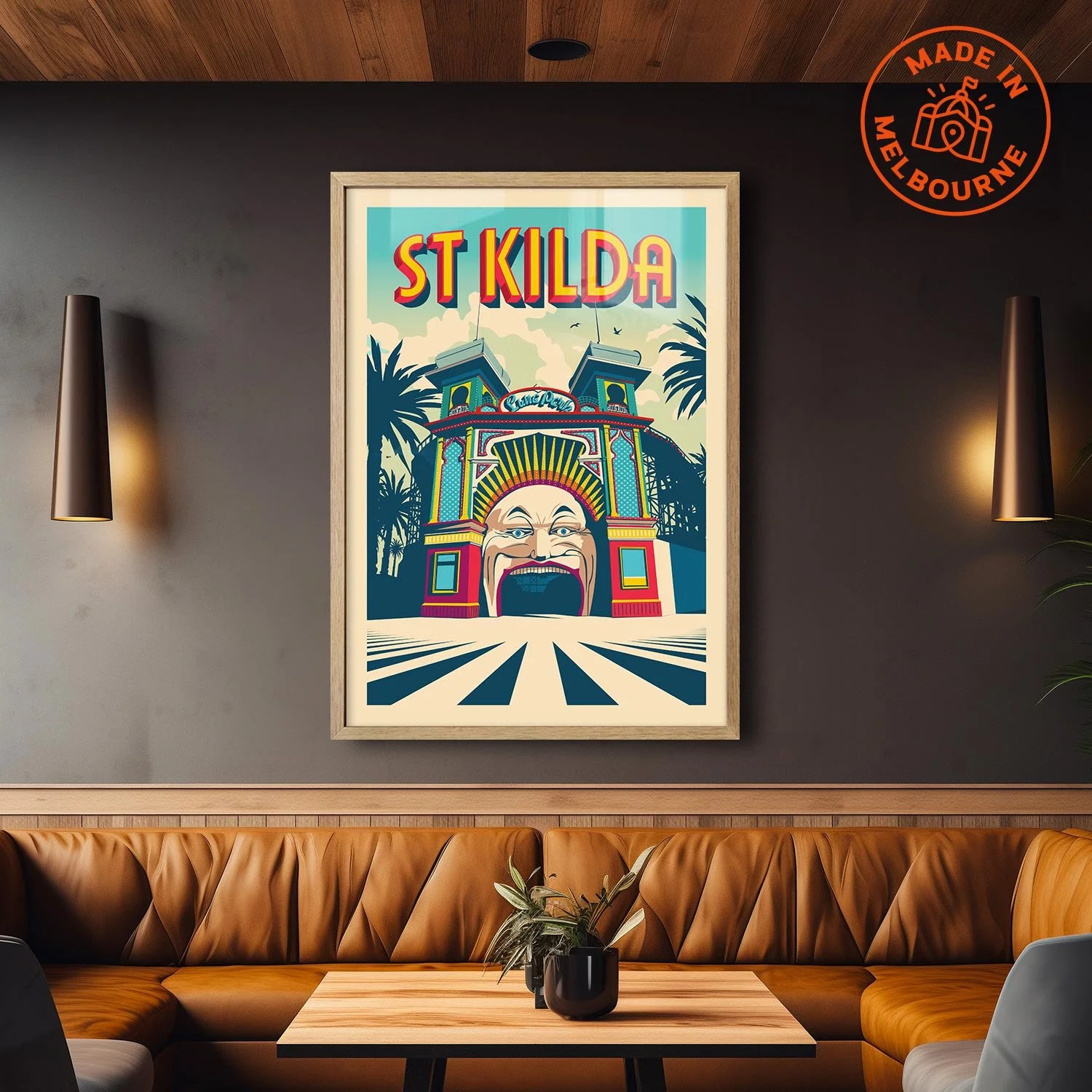 Image 6 of 10
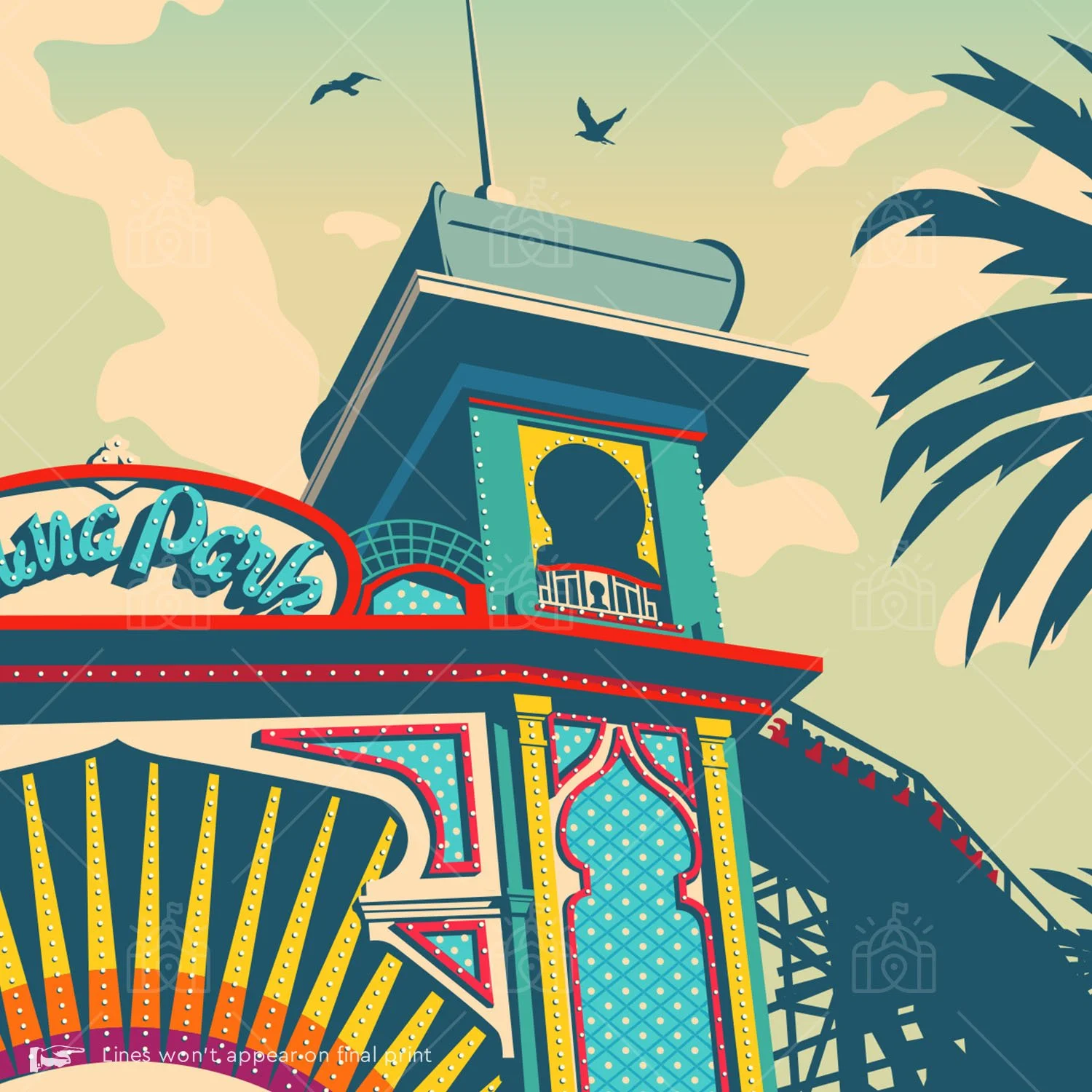 Image 7 of 10
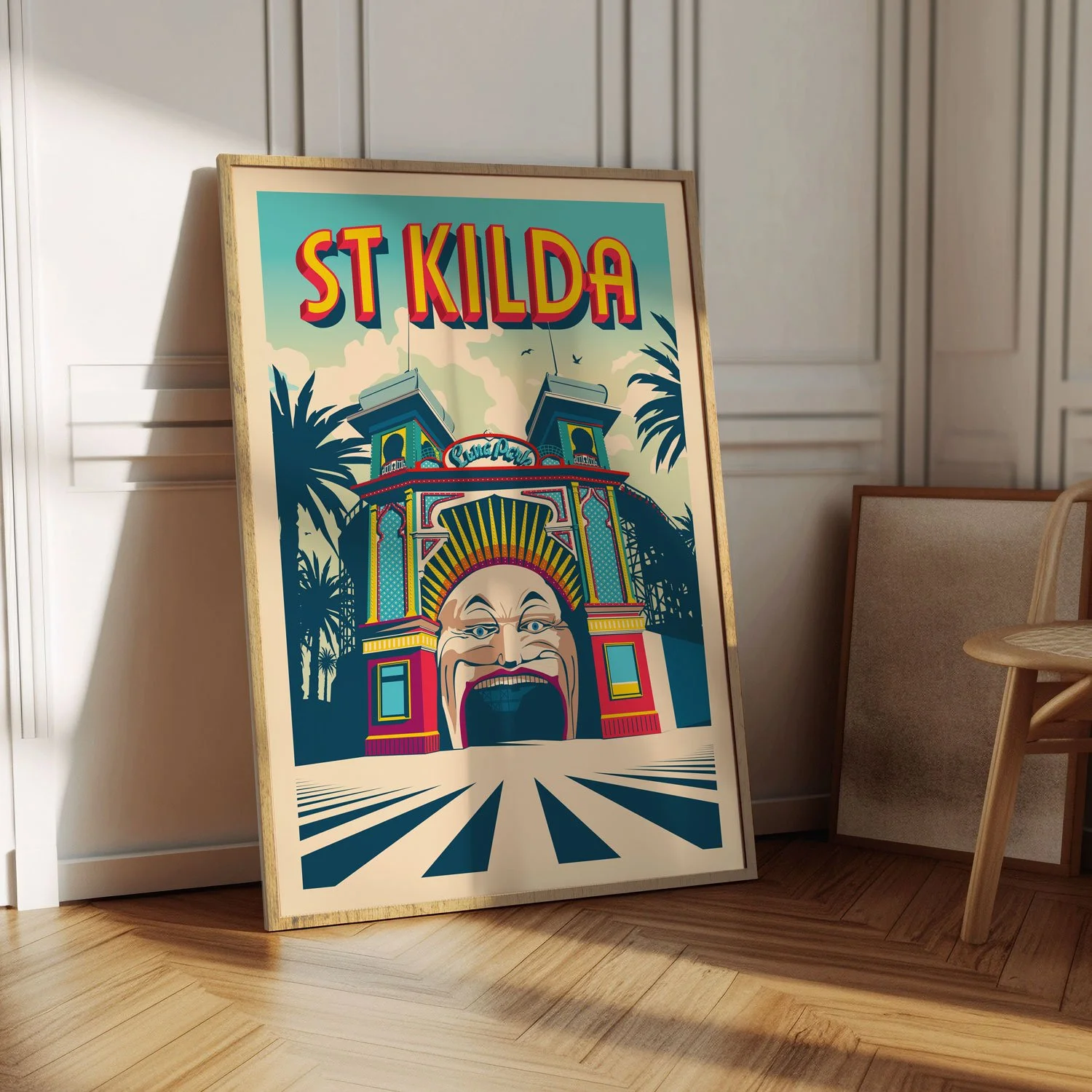 Image 8 of 10
 Image 9 of 10
 Image 10 of 10